The Ausangate Trek in Peru, the most enigmatic hike in Peru
The Ausangate Trek is a 42.6-mile (68.6 km) loop around Ausangate (6,384 m / 20,945 ft), the highest mountain in the Cusco region. It starts at about 12,500 ft (3,800 m) and crosses passes of up to 16,800 ft (5,120 m), through one of the most beautiful landscapes in the Andes: small Quechua villages, glacial lakes, snow-capped peaks and endless herds of alpacas. Here is how our five days on the trail went.

The route is very remote, with only small villages and no hospitals. We had already spent several days acclimatizing in Cusco and hiking the Salkantay Trek, and it made a big difference. If this is your first time at altitude, spend at least 48 hours in Cusco before you start.
Ausangate Trek at a Glance
| Day | Route | Distance | Elevation gain | Campsite |
|---|---|---|---|---|
| Day 1 | Tinki to Upis | 7.5 mi (12.1 km) | 2,346 ft (715 m) | Upis |
| Day 2 | Upis to Pucacocha | 10.25 mi (16.5 km) | 2,946 ft (898 m) | Pucacocha |
| Day 3 | Pucacocha to Qampa | 7.3 mi (11.7 km) | 2,093 ft (638 m) | Qampa |
| Day 4 | Qampa to Pacchanta | 10.6 mi (17.1 km) | 2,073 ft (632 m) | Pacchanta |
| Day 5 | Pacchanta to Tinki | 7 mi (11.3 km) | 272 ft (83 m) | None (back to Cusco) |
| Total | 42.6 mi (68.6 km) | 9,730 ft (2,966 m) |
Day 1: Tinki to Upis
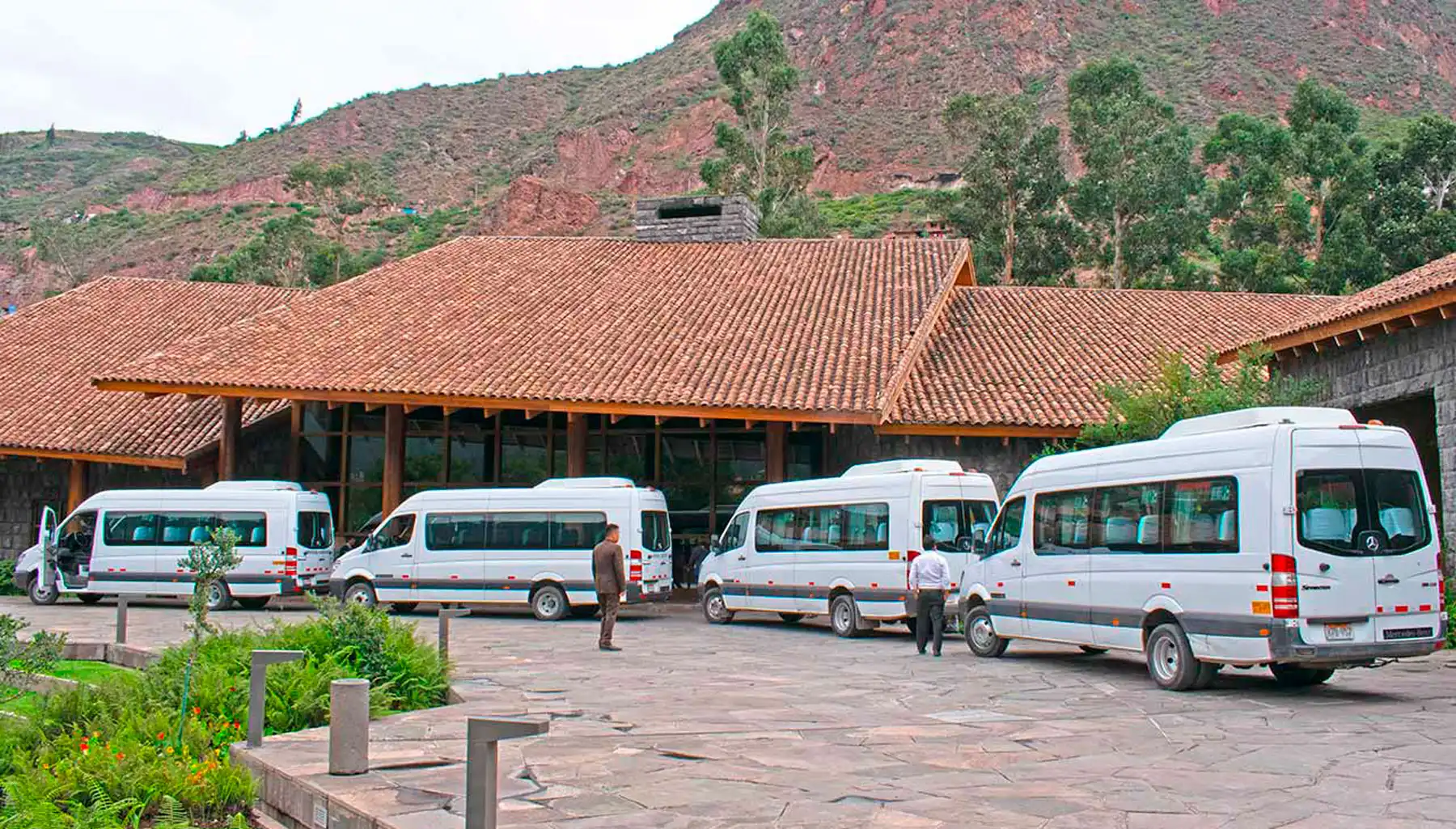
Just like on our first trek, the Salkantay, we met at the Vidal Expeditions office the night before to go over the itinerary. We also met our guide, José Antonio. Edith and I would be the only people on this trip, and we were very excited about that. Antonio and a driver picked us up from our hotel early on day one and drove us from Cusco to the small village of Tinki. The drive took about 3 hours. I kept myself busy reading Ken Follett’s World Without End while Edith slept. We stopped in front of a small market.
Tinki looked to have only a few hundred inhabitants. The buildings were made of adobe and the roads were only partly paved. The people were beautiful, with sun-kissed skin weathered like golden raisins, dressed in bright home-woven alpaca garments. We arrived in the morning bustle at about 7 am, when people were buying food and goods for the day ahead. Antonio jumped out and disappeared into one of the markets while we waited in the car.
Coca Leaves for Pachamama
Antonio came back carrying a large bag of coca leaves, gifts for the people we would meet, blessed by Pachamama, the goddess of earth and time. I immediately appreciated his deep connection to the Andean and Quechua way of life. In Cusco, we had lear
ned how the Spanish conquest tried to erase local beliefs, so it was inspiring to see communities in the high Andes preserving their language and traditions. For the first time, I felt I was witnessing the real, glorious Peru.
After lunch, the views were breathtaking: golden hills stretching to the horizon, with alpacas grazing on every hillside. We left the dirt road for narrow grazing trails and climbed toward Ausangate, now veiled in clouds as the temperature dropped. Only then did I realize how warm the day had been. It was a perfect introduction to the majesty and contrasts of the Andes.
First Camp at the Upis Hot Springs
At our campsite we were surprised to find a solitary stone
structure next to a natural hot spring. I wanted to jump in, but the cold air kept me out, so I explored the spring instead while I waited for dinner. Upis has stunning views of snow-capped Ausangate at sunset.
Dinner was soup, rice, chicken and potatoes, with lively Quechua radio looping a few cheerful songs in the background. It felt playful and authentic. During dinner, Antonio told us about the nearby Qoyllur Rit’i festival, which celebrates Andean culture with dance, food, and tradition.
Day 2: Upis to Pucacocha via Arapa Pass
We woke up in Upis to a beautiful sunrise. The alpenglow of the Andes is pure magic. Breakfast was bread and a delicious quinoa, apple and cinnamon porridge. I stuck to my routine of starting the day with two cups of instant coffee, made so thick it looked like tar on my spoon. Antonio explained the plan for the day, which would take us up and over the first of four passes on the trek: Arapa Pass (Arapa Apacheta), at 16,150 ft (4,920 m). Day two would cover 10.25 miles (16.5 km), with nearly 3,000 ft (900 m) of climbing.
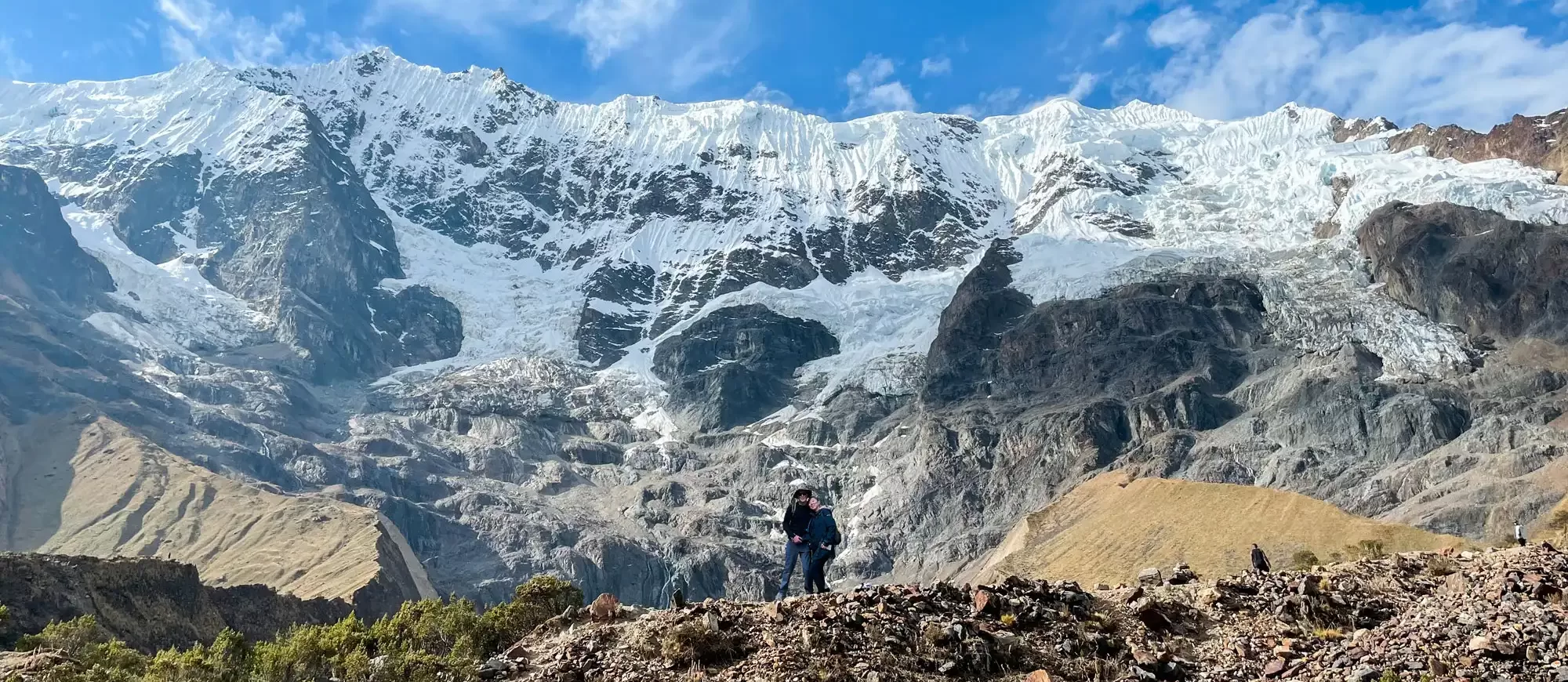
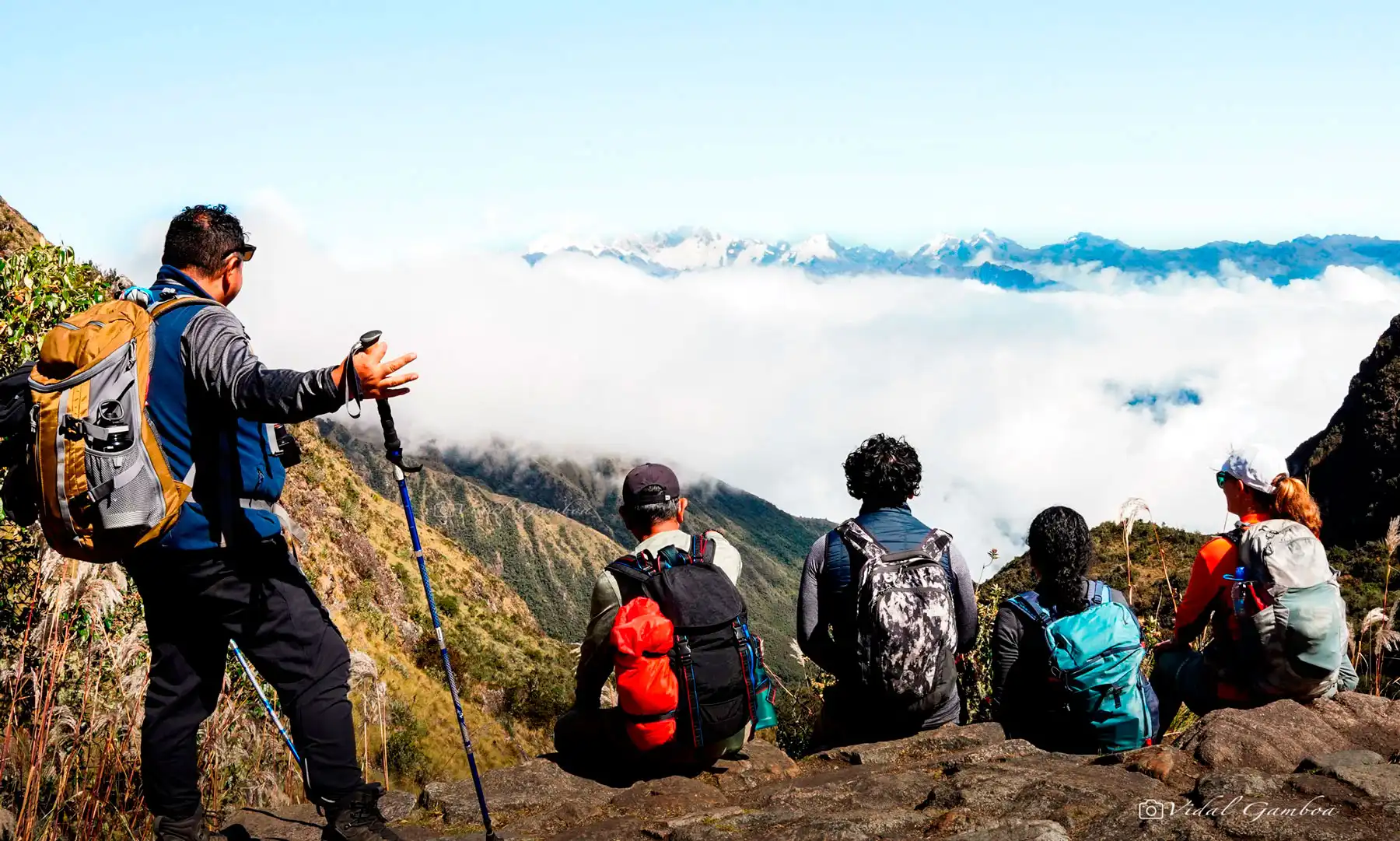
The first mile was boggy, and it wasn’t long before Edith dunked one foot into the ice-cold glacial water we were trying so hard to avoid. Luckily, her feet dried quickly in the dry air. We took a few pictures at the base of Ausangate before starting the steep climb to the pass. This is when I really started to appreciate Antonio as a guide. His timing was impeccable. One moment he was beside us, explaining the history and geography of the landscape, and the next he was off ahead, giving us plenty of time to ourselves.

Crossing Arapa Pass
The hike up to Arapa Pass was steep but steady, and we made it up without much trouble. The time we had spent acclimatizing in Cusco and on the Salkantay Trek must have helped, because neither of us felt the thin air above 16,000 ft. This was also the closest we had been to the 20,945 ft (6,384 m) summit of Ausangate in our first 24 hours on the trail. I was really looking forward to the next three days, as we made a counterclockwise loop around the massif.
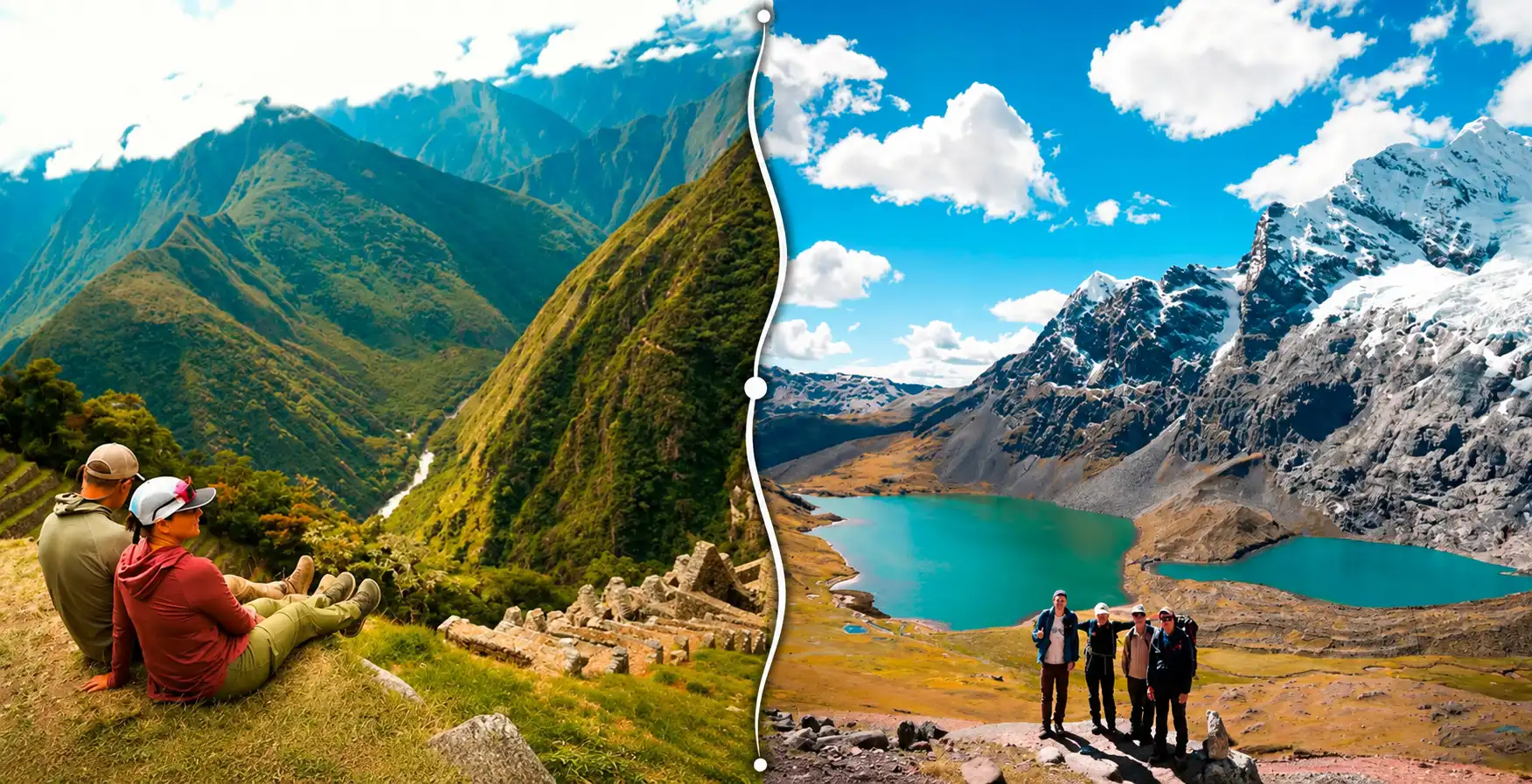
Past the pass, in front of me lay the most b
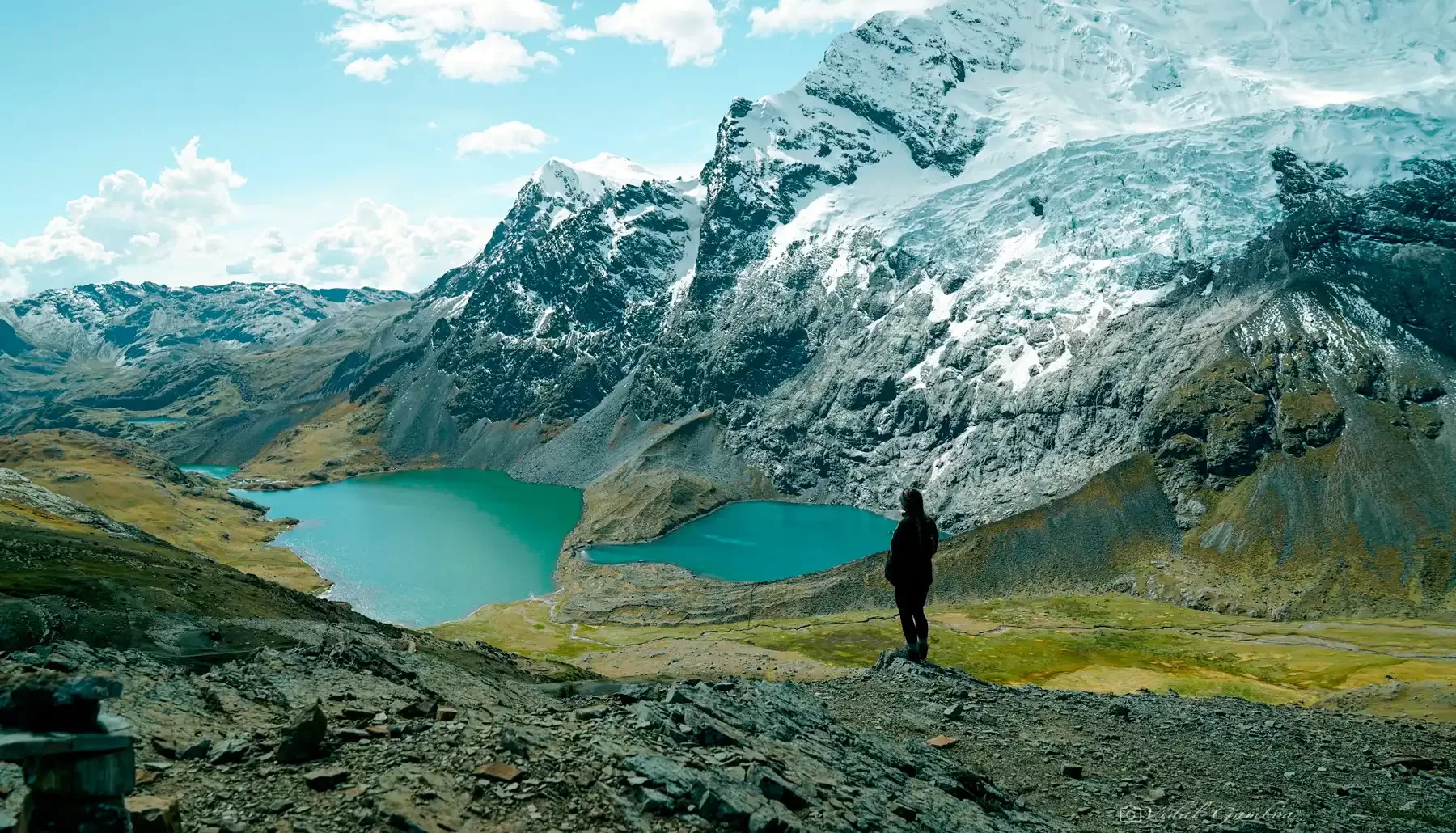
eautiful glacial lakes I had ever seen. They were a deep sapphire blue, surrounded by flickering blades of golden grass, deep beneath the towering peaks above. It was humbling to be surrounded by so much untouched beauty, with only Pachamama watching. The morning air was calm, leaving the surface of each lake still and reflecting the world around it. Every view feels like the most beautiful thing you have ever seen, and yet it is outdone with your very next step. If there is a heaven, it has to look like this.
Llamas, Alpacas and the Elusive Vicuña
The second half of day 2 was a shorter climb over another pass, which we tackled with energy and enthusiasm. Antonio told us about the glacial lakes we would pass and introduced us to the South American camelid family: llamas, alpacas, vicuñas and guanacos. Most of the animals in this region are alpacas. Llamas live at lower elevations in the Cusco province, and guanacos are found further south, in Argentina.
The most elusive is the vicuña, native to the high Andes along the Ausangate Trek. Vicuñas produce the softest and warmest wool in the world, and vicuña garments are among the most expensive anywhere. They are reclusive, have never been domesticated, and are hard to spot in their high-altitude habitat. Seeing one is considered a very good omen, so I made it my personal goal for the trek. The anticipation gave our journey through this breathtaking landscape an extra sense of excitement and purpose.
On the way over the second pass, we saw a few stunning turquoise lakes. They get their color from rock flour, fine bedrock ground down by moving glaciers. After the pass, we made our final descent to our campsite at Pucacocha, in another gorgeous golden valley. We set up camp, had a nice dinner and fell into a deep sleep, with tired legs and satisfied souls.
Day 3: Pucacocha to Qampa via Palomani Pass
The morning of day three brought the coldest temperatures of our trip. Despite the chill, Edith and I were eager to start the climb toward Palomani Pass, flanked by glaciers on the southwest side of Ausangate. Day 3 covered 7.3 miles (11.7 km), with about 2,100 ft (640 m) of ascent, to a maximum elevation of 16,800 ft (5,120 m), the highest point of the trek. It was a shorter day, which gave us time to enjoy the views.
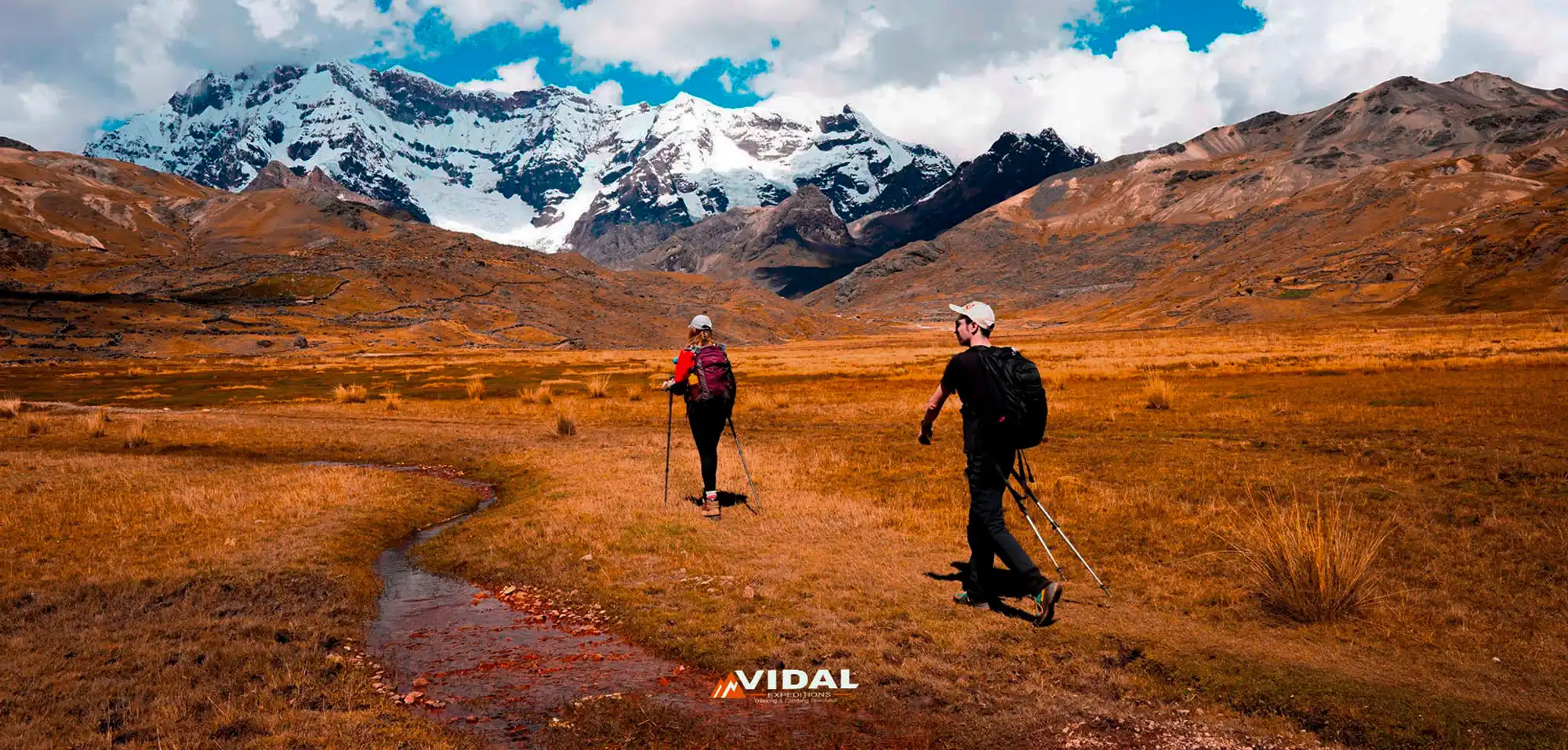
The climb began right from camp and soon revealed our first views of the famous painted hills, their colors dazzling across the landscape. As we neared the pass, the snow got deeper, and suddenly the sky and ground turned white and gray, hiding the colors we had admired minutes before. Our horseman led the way, with Edith’s and Antonio’s breathing audible behind me. A caracara hawk soared overhead as I reached the top, where I paused to take in the perfect panorama on both sides.
An Andean Offering at Palomani Pass
After we photographed the pass, Antonio performed a traditional Quechua ritual to thank Pachamama for our safe journey. He t
ook three coca leaves from his bag, held them to his chest, and asked us and the porters to do the same. The people of the Andes believe each mountain is a deity, and Antonio spoke their names, blowing over the leaves as a prayer. We followed along. At the end he hugged us and sprinkled confetti over us as a blessing. Our leaves were placed in a sacred cairn, sealed with a final prayer, and we continued.
The views from Palomani Pass were breathtaking: painted hills, valleys, snow-capped peaks, living glaciers, and clouds that seemed celestial. The colors were so vivid they overwhelmed the senses. Descending from the pass, we followed alpaca tracks through the valley, surrounded by these gentle animals grazing. It was a serene end to a magical moment.
Among the Alpaca Herds
After lunch we hiked toward our campsite, and with perfect timing, the clouds began to clear. For the last section of day three we walked among alpaca herds, more numerous than I could count. The hills sparkled gold and yellow, like something out of a storybook, with the smell of ice in the air. After the beauty of Palomani Pass, I felt like I was floating on a cloud. Sometimes life is just too good to be true.
We reached camp at Qampa early in the afternoon and relaxed with perfect views of Ausangate. We knew day 4 would bring our last high pass, so we went to bed early to rest for what lay ahead. As on the previous nights, the afternoon sky filled with bands of cirrus clouds. When the sun disappeared, so did the clouds, leaving a heavy cold in the air and crystal-clear skies.

Day 4: Qampa to Pacchanta
Day four started with another sublime morning. The sky was clear and just beginning to fill with wispy clouds. Edith and I headed to the main tent for a delicious breakfast of crepes and toast with jam. Antonio went over the day’s hike and told us we would cross our final high pass, at 16,600 ft (5,060 m).
The day began much like day 3, with a steep climb followed by a descent among peaks and alpine glaciers. The climb was steep but short, and after 3.5 miles (5.6 km) we were standing at the top. It was a phenomenal sight, with stone cairns everywhere like an army of stone soldiers. The wind howled in a constant stream, as if forced from a broken pipe. The cold couldn’t dampen our spirits, though, and we stayed for quite a while to enjoy our final high pass.
While exploring, I noticed movement about 1,000 ft above the pass. “Could it be?” I asked myself. “Have I finally seen the storied vicuña?” I pointed them out to Antonio, who confirmed with excitement that they were vicuñas. The first section of the descent was single track, but it soon turned into a web of trails carved by the alpacas that graze here. Once again I was speechless at the beauty of the Vilcanota (Willkanuta) range. I kept turning to take in all 360 degrees of it. There are simply no bad views here, and I wanted to remember it all.
Down to Pacchanta
We took a break halfway down, next to a small lake with grazing alpacas. The trail ran along the hillsides, and I almost felt bad for Antonio because we were moving so slowly. There are moments and places that make you fully aware of how delicate and precious life is. You can never go back in time to redo things. On this trek I wanted to slow down and really see where I was, instead of just letting my body move through it.
For the last few miles of day 4, the trail turned into a dirt road, and we started passing small houses. We camped for the night in the village of Pacchanta. I was amazed that people live out here, and at the same time a little envious. Life at 15,000 ft must be hard, but you can’t ask for a better backdrop to your life story.
That evening we walked around Pacchanta, played with a lively group of puppies who kept begging for food, and looked back in amazement at the last four days. The only downside of travel is knowing that you eventually have to go home. This was our final night on the Ausangate Trek, and I just wasn’t ready for it to end.
Day 5: Back to Cusco
We woke up early on our last morning in Pacchanta and rode back to Cusco.
Plan Your Own Ausangate Trek
Inspired to do it yourself? Our complete Ausangate trek guide covers every route, the best time to go and how hard each day is. Before you pack, check our Ausangate trek packing list and read how to prevent altitude sickness in Cusco. Still have questions? See our Ausangate trek FAQs.
Want to do this trek with us? Join our Ausangate Trek packages with a local guide, camping gear, horses and all meals included.
You may also be interested in:
- A Complete Guide of Ausangate Mountain
- Rainbow Mountains of Peru
- Ausangate Trek vs Inca Trail
- Best Tours in Cusco
- Hiking Gear for Rent