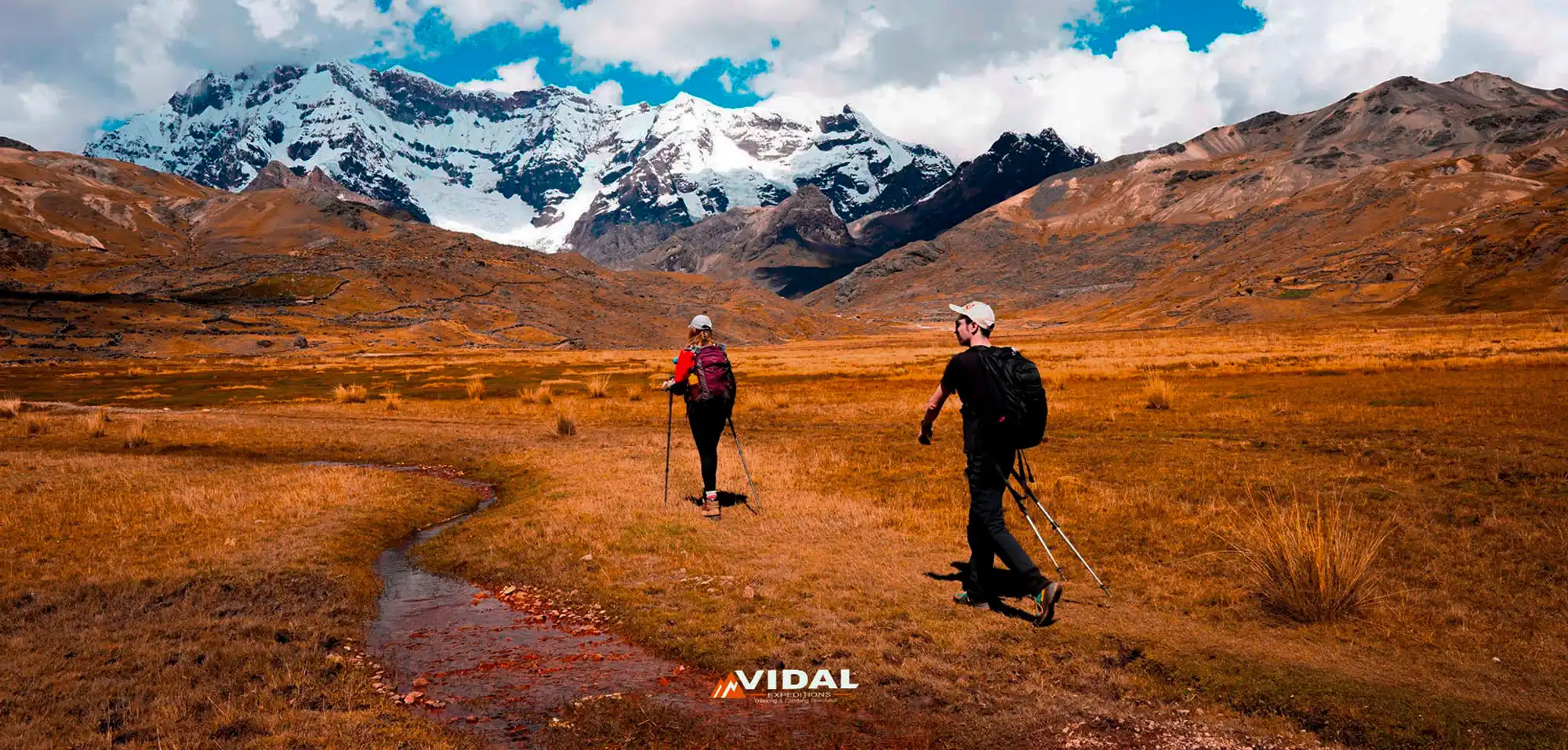
Standing over 20,944 feet / 6,384 masl tall and considered one of the most important Apus in the Andes, Ausangate Mountain is much more than just an imposing peak.
For centuries, it has been a source of life, spirituality, and balance for the surrounding communities. Today, it is also one of the most comprehensive trekking routes in Peru.
On a single trail, you can encounter turquoise lakes, colorful mountains, hot springs, and landscapes that change dramatically with each day.
It is not just an adventure trip; it is an immersion into a region where nature and culture remain deeply intertwined.
What is Mount Ausangate?
Ausangate is the highest mountain in the Cusco region at 20,944 feet / 6,384 masl and the fifth-highest peak in Peru. Its glacier dominates much of the landscape of the Vilcanota mountain range and sustains ecosystems, rivers, and communities that depend on its waters. Beyond its geographical significance, it is a spiritual symbol deeply rooted in the Andean worldview.
Today, Ausangate is also one of the most iconic trekking destinations in Peru. Its trails traverse high-altitude passes, vibrantly colored lakes, high-Andean grasslands, and villages that maintain ways of life inherited from previous generations. This combination of nature, culture, and physical challenge is what makes this mountain so special.
Where is Mount Ausangate located?
Ausangate Mountain is located about 68.35 miles (110 kilometers) southeast of the city of Cusco, in the province of Quispicanchi, within the Vilcanota mountain range.
It lies between the valleys of the Vilcanota and Tinquimayo rivers and spans the districts of Ccatca, Ocongate, and Marcapata. This area is home to Quechua communities known as Ausangaterunas, who preserve ancestral traditions and maintain a spiritual connection with the mountain.
Meaning and Culture
What does Ausangate mean?
The term “Ausangate” comes from Quechua and is usually interpreted as “Sacred Apu who dominates” (Apu = divinity or spirit of the mountain; Sangate = “the one who governs”).
Some sources also suggest that it may derive from the Aymara word “Awsanqati,” which refers to a cave or opening in the rock, alluding to the mountain’s geographical features and its presence in Andean myths.
Ausangate in Inca Culture
Ausangate was one of the most revered Apus of the Inca Empire. It was believed to hold power over water, fertility, and agricultural cycles, as well as the well-being and protection of communities.
The Incas viewed mountains as sacred entities linked to the balance between the different worlds: Hanan Pacha, Kay Pacha, and Uku Pacha. In this context, Ausangate held a special place. Its melting snow and ice fed the region’s water system, reinforcing its importance both materially and symbolically.
To this day, many of these beliefs are maintained through offerings. Others have merged with the Catholic religion, giving rise to pilgrimages such as the Qoyllur Rit’i, where the Apus are venerated and, at the same time, pilgrims ascend to receive the blessing of the Christ of the Mountains, whose appearance is part of the tradition.
Spiritual powers of the mountain?
Within the Andean worldview, this Apu exerts a direct influence on the lives and destinies of those who inhabit its surroundings. Among its main spiritual powers are:
Healing
It is believed that if a person approaches with faith and respect, the Apu can offer protection and healing, especially against illnesses of spiritual origin, such as negative energies. Its power allows for the harmonization of body, mind, and spirit.
Control of the weather
As guardian of the snow-capped peaks and water sources, it can regulate rain, wind, and the seasons. In this way, it maintains the natural balance and fertility of the fields.
For this reason, communities perform rituals and make offerings to gain his favor, bring rain at the right time, and protect themselves from natural disasters.
Communication
It is said that the Apu does not communicate directly or audibly but rather through dreams, visions, or signs in nature, such as the behavior of animals, the wind, or the movement of the stars.
Shamans or yatiris act as intermediaries, interpreting these messages and performing rituals to honor the earth.
Punishment
He can also punish individuals or communities that fail to fulfill their spiritual responsibilities, such as neglecting offerings or rituals. These punishments may manifest as natural imbalances, such as droughts, storms, frosts, or even diseases.
Creation
He is credited with the power of creation thanks to his connection with nature and cosmic balance. In this way, he gives rise to landscapes, springs, and fertile lands.
Protection
He is considered a spiritual guardian of the mountains and valleys. He maintains cosmic order and ensures the prosperity and well-being of the communities living in his domain.
History of Mount Ausangate
The history of Ausangate dates back approximately five thousand years, with the presence of the Cuyos ethnic group, originally from the Amazonian plains. This group settled in the areas near the mountain to control the routes connecting the Andes with the Amazon.
From that point on, they maintained relations with peoples such as the Harakbut and the Matsigenka, establishing trade networks that also linked them to cultures such as the Wari and Tiahuanaco. These connections existed between Andean herders and communities in the cloud forests.
Pre-Inca Period
During this period, the mountain was known as Ausancata and was considered one of the main huacas of the Collasuyo. It was believed that an idol dressed in special attire resided there, to whom sacrifices were offered.
According to these beliefs, the deities traveled from the huacas to Lake Sibinacocha and then returned to enter newborns as part of ritual cycles related to the origin of life.
Inca Period
In the mid-15th century, during the expansion of the Tahuantinsuyo, the Inca Yahuar Huacac incorporated the Cuyos into the empire. As part of this process, he reorganized their social structure and promoted the worship of the god Inti along with other Andean deities.
From then on, Ausangate acquired greater religious significance. The nearest ayllu took on its care and organized ceremonies that included offerings such as corn chicha and coca leaves. On special occasions, they also performed camelid sacrifices and capacocha rituals to ensure the Apu’s protection and avoid his displeasure.
Colonial Era
In 1572, during the colonial period, the Cuyos were displaced due to the policies of indigenous resettlement imposed by the Spanish. However, they continued to move through the warm valleys of Quispicanchi and Paucartambo, preserving some of their customs.
Toward the end of the 16th century, following the adoption of Christianity, the tradition of Qoyllur Rit’i emerged. It recounts the apparition of Christ who helped a young shepherd named Mariano Mayta on the snow-capped Sinakara, at the foot of Qolquepunco. This event gave rise to one of the most important pilgrimages in South America, celebrated every year between May and June.
Today
Today, Ausangate stands as a symbol of cultural resilience. In addition to its spiritual significance, it has become a premier destination for experiential tourism and trekking.
Local communities, especially the shepherds, maintain an ancestral connection to the mountain and offer authentic experiences amidst glaciers, turquoise lakes, and living traditions.
The Myth of Salkantay and Ausangate
According to tradition, Salkantay and Ausangate were brothers who lived in Cusco. After a long drought that affected their village, they both decided to set out on a journey to unknown lands in search of a solution.
Salkantay set off northward, where he discovered the jungle. There, he also found forbidden love with Veronica.
Meanwhile, Ausangate headed south, where he found abundant Andean resources. From there, he sent food such as camelid meat, corn, and potatoes, among other products.
Thanks to these actions, both managed to save the people of Cusco from the drought.
What to see on the Ausangate route?
Exploring Ausangate means venturing into one of the most comprehensive and diverse routes in the Peruvian Andes. Along the way, travelers encounter vibrantly colored lakes, glaciers, high-mountain passes, hot springs, Quechua communities, and detours to some of Cusco’s most photographed landscapes.
It is not a single postcard-perfect scene, but rather a succession of settings that change with each day. This variety is one of Ausangate’s greatest strengths: it allows you to combine adventure, contemplation, living culture, and nature tourism in a single journey.
Natural Landscapes
Mount Ausangate
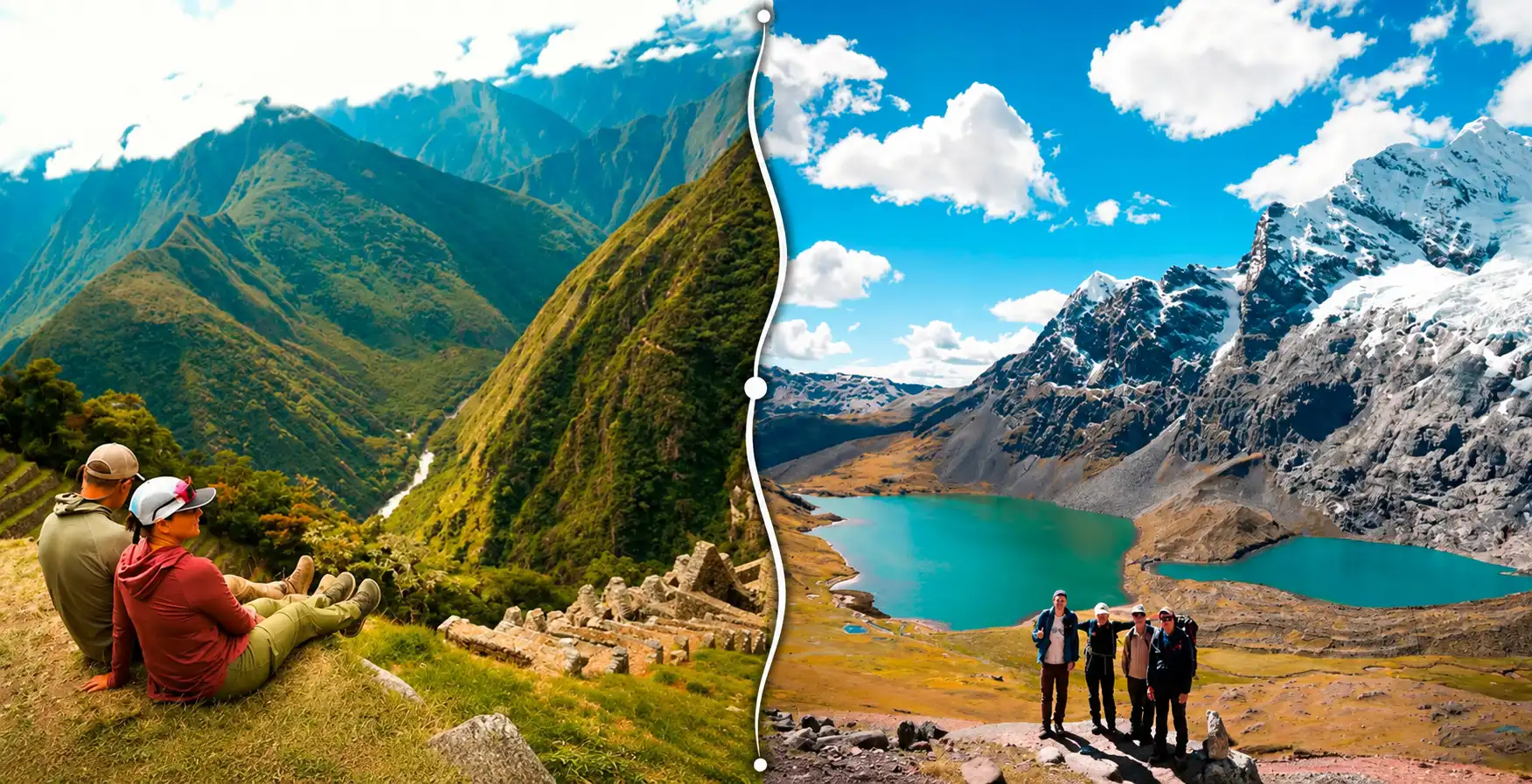
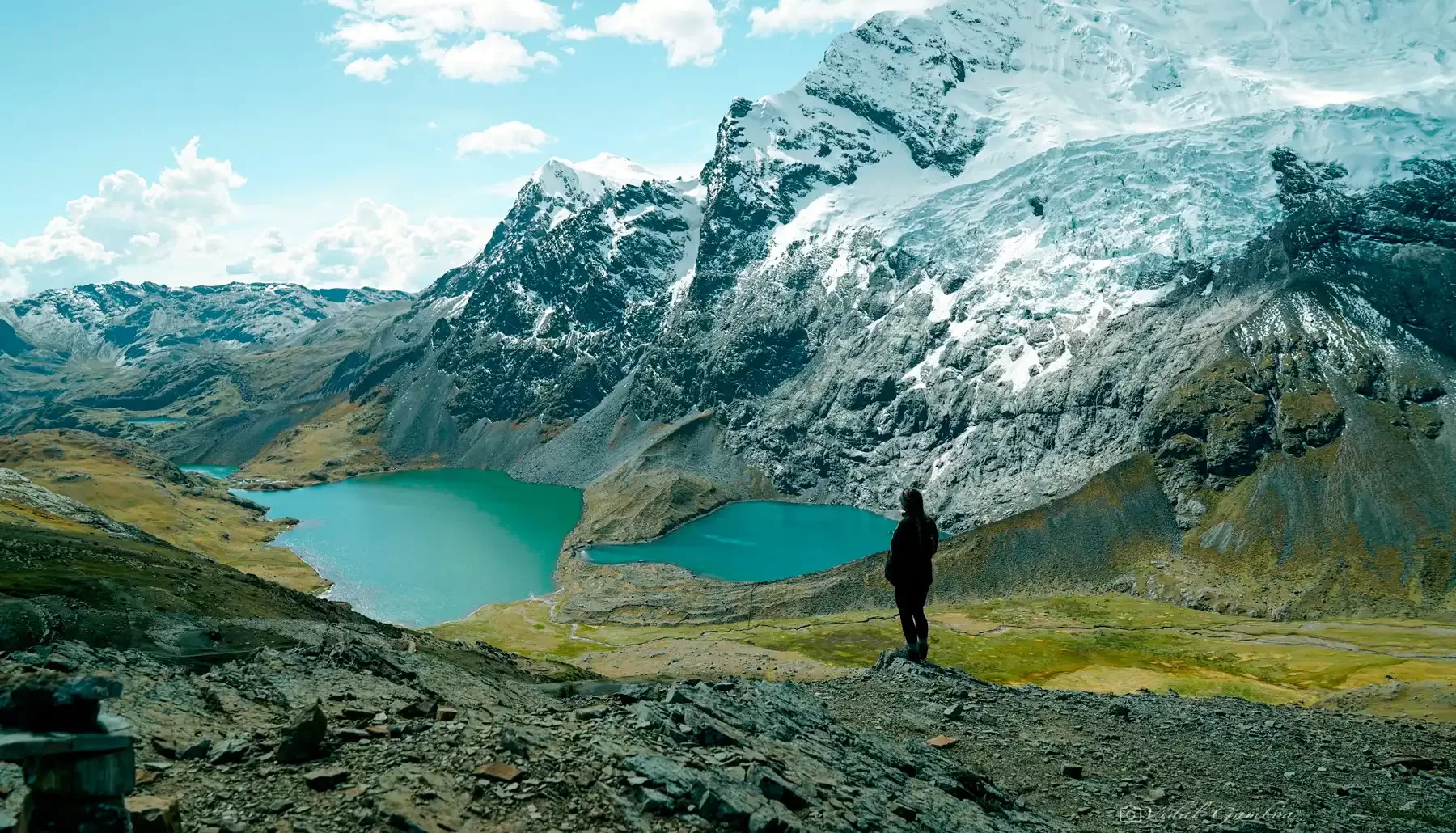
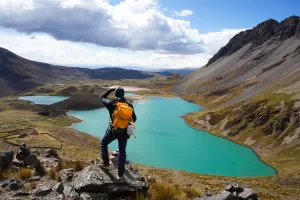
Mount Ausangate stands out for its imposing natural beauty and unique landscapes. Its snow-capped peaks rise above vast high-Andean valleys, surrounded by turquoise lakes, glaciers, and colorful mountains.
Throughout the surrounding landscape, striking contrasts emerge between the white of the ice, the blue of the sky, and the reddish and green hues of the earth, creating a breathtaking scene that captivates all who visit.
Surineqocha Lagoon
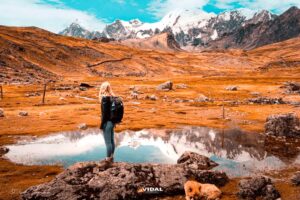
Surineqocha Lagoon is located along the route to the Mountain of Colors (Vinicunca) in Cusco, Peru. Surrounded by imposing Andean mountains, it stands out for its crystal-clear waters, which reflect the sky and the snow-capped peaks that surround it, creating a natural landscape of great beauty.
Its name, of Quechua origin, reflects its connection to Andean culture. It is an ideal place for those seeking to enjoy nature, go trekking, and experience a peaceful time in contact with the environment.
The Rainbow Mountains
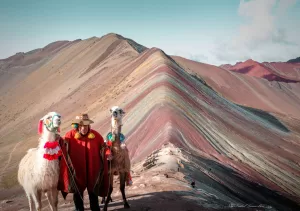
Around Ausangate, there are several rainbow mountains, the best known being Vinicunca, located at 17,060 feet / 5,200 meters above sea level. Its bands of color, formed by geological and mineral processes, have made it one of the most iconic images of tourism in Cusco.
Although there are other colorful mountains in the area, Vinicunca is the one most frequently included in treks linked to Ausangate.
Many visitors hike it as a standalone excursion. However, when integrated into a trekking route, it ceases to be merely a photo stop and becomes part of a much more complete high-mountain experience.
The 7 Lakes of Ausangate
The 7 Lakes of Ausangate offer one of the most beautiful and accessible hiking routes in the vicinity of the snow-capped peak. Along the trail, you’ll encounter lakes of varying hues, surrounded by mountains, high-Andean vegetation, and direct views of the glacier.
The lakes that make up this circuit are: Pucacocha, Patacocha, Alqacocha, Qomercocha, Otorongo Macho, Otorongo Hembra, and Azulcocha.
It is an excellent option for those who wish to experience the Ausangate area without undertaking the full multi-day circuit. Additionally, it is often combined with a visit to the Pacchanta hot springs, which adds a very appealing element of relaxation.
Sigrenacocha Lake
Sigrenaqocha Lake is one of the mountain range’s greatest scenic treasures. Its size, color, and remote setting make it a particularly appealing destination for travelers seeking less-traveled routes and quieter experiences.
Due to its location and beauty, it often appears on longer itineraries and in itineraries for those who wish for a deeper immersion in the world of Ausangate.
Pacchanta Hot Springs
The Pacchanta hot springs are one of the most rewarding stops in the area. After a demanding hike, soaking in these pools with a view of Ausangate is an experience that is hard to forget.
In addition to its value as a place to relax, Pacchanta serves as a hub, offering basic lodging and a window into community life. It is an essential stop on many itineraries.
Route and Highlights
Upis Community
Upis is one of the most important points along the Ausangate circuit. This community, located at 14,108 feet / 4,300 meters above sea level, offers lodging, food, and experiential tourism activities, as well as serving as a gateway to several trekking routes.
Its value lies not only in its logistical role but also in the opportunity to get a closer look at the daily lives of the families living in the area. Engaging with their traditions, textiles, and connection to the mountain greatly enriches the traveler’s experience
Wayna Ausangate
The Wayna Ausangate pass, at over 16,404 feet / 5,000 meters above sea level / , is one of the most breathtaking points along the route. From there, you’ll enjoy privileged views of the snow-capped peak, intensely colored lakes, and vast glacial landscapes that perfectly capture the grandeur of this route.
It’s also one of those places where you can most clearly feel the high-mountain character of Ausangate: altitude, silence, wind, and a sense of immensity that defines the journey.
Abra Arapa
At an elevation of 15,748 feet / 4,800 masl, Abra Arapa offers a combination of open vistas, turquoise lakes, and a distinct sense of isolation. It is one of the spots where travelers most clearly experience the wildest aspect of the Ausangate Trek, as it lies very close to the snow-capped Ausangate.
Its surroundings particularly appeal to those who appreciate photography of unspoiled landscapes and those seeking settings less impacted by mass tourism.
Hatun Pukaqocha or Jatun Pucacocha
Jatun Pucacocha stands out for the reddish color of its waters and the impressive surroundings. It is located in the heart of the Vilcanota mountain range, at the foot of the snow-capped Ausangate, and is one of the most memorable spots for those undertaking the classic circuit.
The lake is approximately 0.56 miles (0.9 km) long, which enhances its presence in the landscape. Its name comes from Quechua and means “great red lake.”
The place combines natural beauty, high altitude, and a contemplative atmosphere that lends an almost mystical character to the route.
Abra Puka or Abra Apacheta
Abra Puka is another of the route’s iconic passes. From there, one can appreciate vast Andean landscapes that blend reddish hues, high slopes, and a succession of mountains that showcase the ruggedness and beauty of this region.
It is a good example of how Ausangate constantly shifts its visual palette: from turquoise lakes to arid landscapes, from white glaciers to reddish earth.
Red Valley
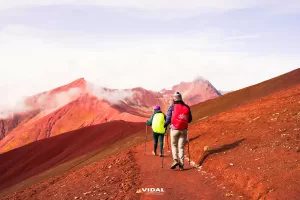
The Red Valley, at over 16,568 feet / 5,050 meters above sea level, is one of the most striking landscapes in the Vinicunca area. Its reddish hues and geological formations create a scene that is rare even within the Peruvian Andes.
For many travelers, this area offers a visual experience as striking as Rainbow Mountain itself, and is often even more special due to the smaller number of visitors.
Palomani Pass
At 17,060 feet / 5,200 meters above sea level, this is the highest point of the Ausangate Trek circuit. From this pass, you can enjoy sweeping views of the Vilcanota mountain range, featuring glaciers, snow-capped peaks, and high-altitude valleys.
It is one of the most challenging sections of the route due to the altitude.
Culture and Sites
Andean Communities
Getting to know these communities adds depth to the journey, as it allows you to understand Ausangate not only as a landscape but as a living cultural territory.
Among the main communities, the following stand out:
- Pacchanta is the most developed for community-based tourism, known for its hot springs and for offering direct experiences with local families and alpaca herders.
- Pampacancha, on the other hand, retains a more authentic and less commercialized character, where Quechua traditions, clothing, and textile work remain integral to daily life.
- Tinqui (Tinki) serves primarily a logistical role, as the starting point of the Ausangate Trek and a hub for local exchange.
- For its part, Ocongate serves as a cultural hub and a point of connection with the high Andean communities, in addition to its ties to important regional traditions such as the Qoyllur Rit’i.
Checacupe Colonial Bridge
The Checacupe Colonial Bridge, built in the 17th century during the Spanish colonial period, spans the Pitumarca River and is one of the area’s most iconic historical landmarks. What makes it particularly interesting is its location alongside two other bridges: an Inca bridge made of stone and a pre-Inca bridge of even older origin, allowing visitors to witness different stages of Andean history in a single location
Checacupe Temple
The Checacupe Temple, known as the Church of the Immaculate Conception, was also built during the colonial era (17th century). Inside, it preserves murals, religious art, and architectural details that reflect the fusion of Andean tradition and Spanish influence.
More than just a building, it is a space that shows how local beliefs adapted during the colonial period, maintaining their own elements within a new religious structure.
What to do on Mount Ausangate?
Around Ausangate, you can enjoy a variety of experiences depending on the type of trip you’re looking for. From challenging high-altitude routes to shorter day hikes, this destination offers options for different levels of adventure.
The surrounding area allows you to combine trekking, landscape photography, visits to hot springs, interactions with Andean communities, and detours to attractions such as Rainbow Mountain or the Red Valley. This versatility makes it an ideal destination for both experienced travelers and those seeking a more accessible, yet equally memorable, experience.
Mountaineering on Ausangate
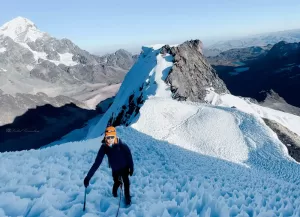
Climbing to the summit of Ausangate is a highly difficult alpine challenge (PD+/AD) that requires prior glacier experience, adequate acclimatization (at least 5 days), excellent physical condition, and specialized technical gear, such as crampons, an ice axe, rope, helmet, and clothing for extreme cold.
The best-known routes are the North Face (slopes of 40° to 45°) and the South Face (between 50° and 60°, with the presence of seracs). Both present risks such as hidden crevasses and constant weather changes, so it is essential to undertake the ascent with guides certified by the Association of Mountain Guides of Peru (AGMP).
In addition to its technical demands, Ausangate is considered a sacred Apu within the Andean worldview, so the ascent also requires respect for its cultural significance and ceremonial sites.
Trekking and Hiking on the Ausangate Route
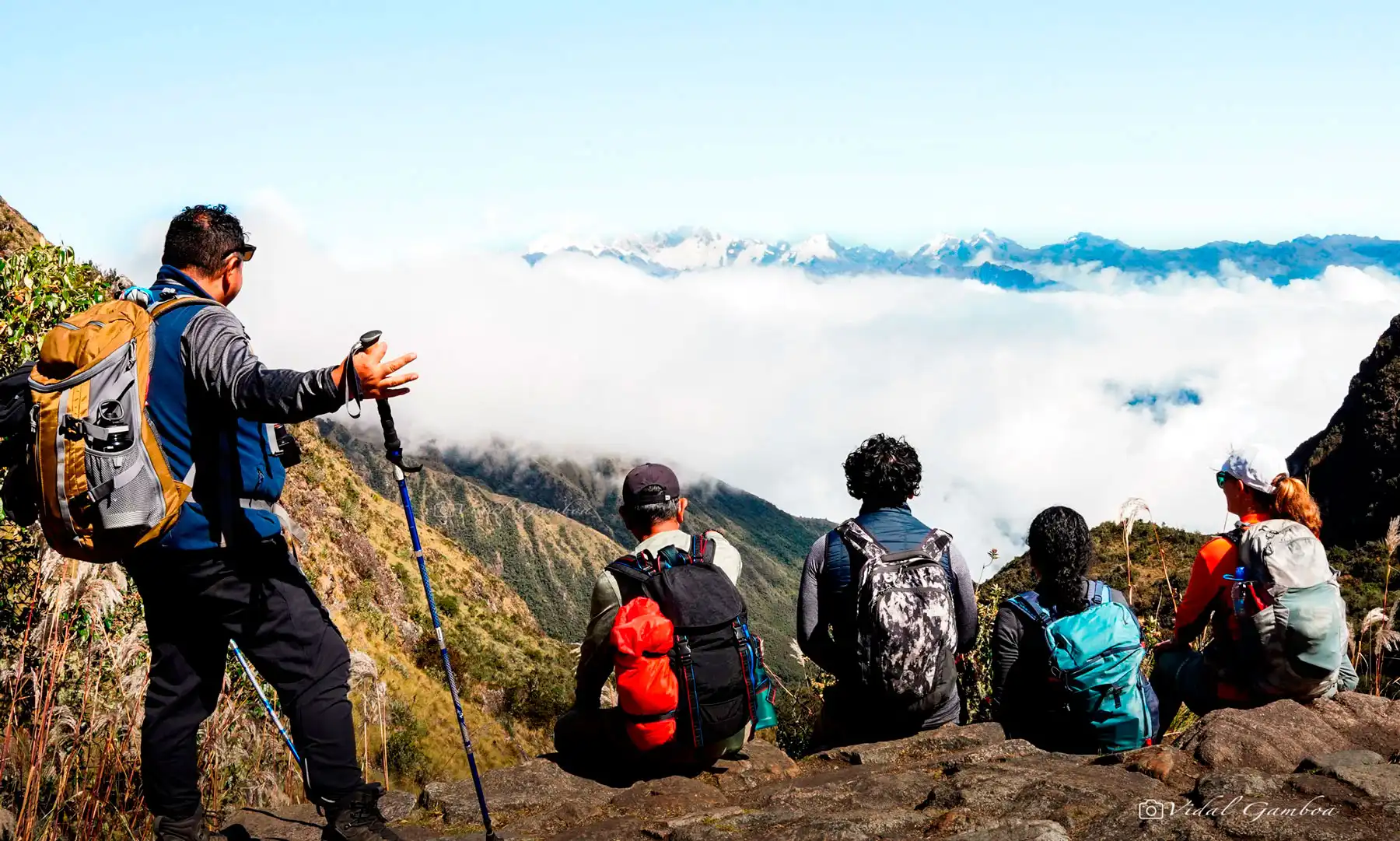
Ausangate offers some of the best high-mountain trekking and hiking routes in Peru. From day hikes to multi-day treks, this destination combines glacial landscapes, vibrant Andean culture, and an authentic experience far from mass tourism.
Trekking in Ausangate (multi-day routes)
The Ausangate Circuit is one of the most comprehensive high-mountain treks in the Andes. It circles the snow-capped Ausangate (20,944 ft / 6,384 masl) and traverses a landscape dominated by glaciers, colorful lakes, wetlands, and Quechua communities.
Depending on the itinerary, the trek lasts between 5 and 7 days, covering distances of approximately 43.496 – 62.137 mill (70 to 100 km). Along the route, travelers cross high-mountain passes exceeding 16,404 ft / 5,000 meters, such as Abra Palomani (7,060 ft / 5,200 masl), the highest point of the circuit.
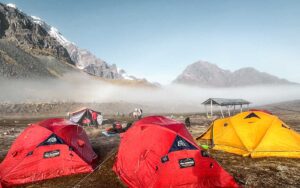
The trek typically involves camping and, in many cases, includes logistical support from pack animals and horses to transport gear. Among the main highlights are the high-Andean lakes, the hot springs at Upis and Pacchanta, and side trips to iconic sites such as the Rainbow Mountain (Vinicunca) or the Red Valley.
It is a demanding route, recommended for travelers in good physical condition and properly acclimated, but in return it offers one of the most authentic and least developed trekking experiences in Peru.
Main Attractions:
- Ausangate Mountain.
- Sibinacocha Lake.
- Mountain of Seven Colors.
Hiking in Ausangate (1-day routes)
- Among the most popular options are:
- The hike to the 7 Lakes of Ausangate
- A visit to the Mountain of Colors (Vinicunca)
- A visit to the mountain range of colors (Palcoyo) and the Red Valley
- Short hikes from communities such as Pacchanta or Upis
These routes combine views of glaciers, turquoise lakes, and immersion in the Andean environment, making them ideal for travelers with limited time or those who prefer a less demanding experience.
Community-Based or Experiential Tourism
One of Ausangate’s greatest strengths is the opportunity to combine trekking with community-based tourism experiences.
In communities such as Upis and Pacchanta, local families offer lodging, meals, and activities related to their daily lives, such as herding alpacas or making traditional textiles.
This type of experience adds real value to the trip. It’s not just about exploring landscapes, but about understanding how Andean communities live and their relationship with the mountain.
Trekking Routes on Mount Ausangate
Ausangate Trek is not a single route, but a collection of high-mountain experiences tailored to different types of travelers. From short 1- or 2-day hikes to multi-day expeditions, here you can choose between a quick introduction or a full immersion in the Vilcanota mountain range.
What makes these routes special is not just the landscape glaciers, turquoise lakes, and colorful mountains, but the chance to experience an environment where Andean culture is still very much alive. Each itinerary combines nature, physical challenge, and connection with local communities.
Weather Conditions on the Ausangate Route
In Ausangate, it’s common to experience intense sunshine, strong winds, unexpected rain, and even snowfall all in a single day. These conditions make preparation essential in a high-mountain environment.
Below, we explain how the weather varies by season and when the best time is to go trekking.
Seasonal Weather in Ausangate
Dry Season (May – October)
During the dry season, Ausangate offers more stable conditions for trekking:
- Mostly sunny days with temperatures between 10 °C and 20 °C (50 °F – 68 °F)
- Very cold nights, with sub-zero temperatures in high-altitude areas (down to -10 °C / 14 °F or lower)
- Strong winds on mountain passes
- There is a low chance of rain, although there may be occasional light showers
Despite moderate daytime temperatures, solar radiation is very intense due to the altitude.
Rainy season (November – April)
During these months, conditions change significantly:
- Frequent rainfall, especially between January and February
- Increased cloud cover and sudden temperature changes
- Average daytime temperatures between 5 °C and 10 °C (41 °F – 50 °F)
- More challenging trails due to mud and humidity
- Possibility of snowfall at higher elevations
Despite this, this season offers advantages such as:
- Greener landscapes
- Fewer tourists
- More peaceful and less crowded experiences
When is the best time to go trekking in Ausangate?
The best time for trekking and mountaineering in Ausangate is during the dry season, between April and October, when the weather is more stable and trail conditions are safer.
- Best weather: May to September (ideal for trekking and photography)
- Fewer tourists: January and February (greater weather challenges)
Key local information:
Although May marks the start of the best conditions, mid-May is usually the ideal time, as the terrain is drier and the weather more stable.
On the other hand, June, despite being the dry season, can see frequent snowfall, especially at high mountain passes, which can make the route more challenging.
Biodiversity on the Ausangate Trail
The Ausangate Trail, located in the Andes of Cusco, is home to a unique biodiversity adapted to extreme high-altitude conditions, ranging from 13,123 to over 20,669 feet (4,000 to 6,300 masl). This high-mountain ecosystem combines iconic wildlife, resilient flora, and landscapes that hold significant ecological value in Peru.
Wildlife
Amid mountains, turquoise lakes, and high-Andean valleys, iconic species adapted to this extreme environment thrive. The Ausangate Trail attracts not only travelers but also researchers interested in its biodiversity and wildlife sighting opportunities.
Mammals
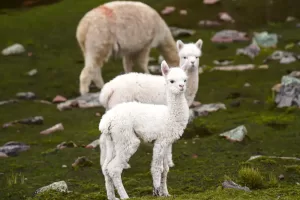
- Llama (Lama glama) and alpaca (Vicugna pacos), domesticated thousands of years ago, vital to the local economy and culture.
- Vicuña (Vicugna vicugna) and guanaco (Lama guanicoe), protected for the quality of their fiber.
- Taruca (Hippocamelus antisensis): Andean deer threatened by hunting and livestock expansion.
- Puma (Puma concolor): a key predator and symbolic figure in the Andean worldview.
- Vizcacha (Lagidium viscacia): a rodent adapted to rocky high-mountain areas.
- Fox (Pseudalopex culpaeus) and skunk: opportunistic predators that play an important role in the balance of the ecosystem.
Birds
- Andean condor (Vultur gryphus): sacred bird of the Andes, endangered due to poisoning and habitat loss.
- Giant hummingbird (Patagona gigas): the largest in the world
- Armed merganser (Merganetta armata): adapted to mountain rivers, with striking plumage.
- Huallata (Chloephaga melanoptera): an Andean goose found in marshy areas.
It is also possible to spot species such as the Andean caracara, the Puna sparrowhawk, falcons, and other birds native to these ecosystems.
Visit the Ausangate Route Responsibly
To engage in responsible wildlife viewing along the Ausangate Route (and in any natural environment), it is essential to prioritize the animals’ well-being, respect for the ecosystem, and personal safety.
Keep the following recommendations in mind:
- Maintain a safe distance: observe without getting too close to avoid stressing the animals.
- Avoid direct contact: do not attempt to touch or feed wildlife.
- Minimize noise and visual impact: speak softly, move slowly, and wear neutral-colored clothing.
- Respect natural schedules: dawn and dusk are the best times for sightings. Avoid using flashlights at night, as they disrupt natural cycles.
- Do not use drones: the noise can scare birds and cause them to abandon their nests or feeding areas.
- Stay on the trails: avoid straying from established paths to prevent damage to the flora.
- Don’t leave trash behind: always take your trash with you.
- Use the right equipment: for example, cameras with zoom lenses so you can observe without getting too close. Avoid using a flash.
- Don’t interfere with natural behaviors: during activities such as hunting or mating, observe without intervening. For example, if you see a fox hunting vizcachas, don’t interrupt it.
- Choose certified guides: opt for operators who work under sustainable tourism principles and understand wildlife behavior without disturbing it.
Flora
The flora of Ausangate has adapted to extreme conditions of cold, intense solar radiation, and low oxygen availability. Between 12,467 and 17,060 feet (3,800 and 5,200 m a.s.l.), species that play key roles in soil conservation and ecological balance predominate.
Among the most common are:
- Andean ichu: a high-Andean grass essential for livestock feed.
- Yareta: a millennia-old plant with extremely slow growth.
- Lichens and mosses: essential for soil formation and conservation.
- Wildflowers: such as gentians and some orchids adapted to high altitudes.
Notable flora:
- Queuña (Polylepis spp.): a native tree that grows at high altitudes (up to 4,500 meters above sea level / 14,764 feet), playing a key role in protecting soils and regulating the climate
- Pisonay (Erythrina edulis): a leafy tree with red flowers, used since Inca times for its fruits and medicinal properties.
- Chachacomo (Escallonia resinosa): used to dye fabrics and make traditional agricultural tools.
- Aliso (Alnus jorullensis): a tree that promotes crop growth by filtering sunlight.
- Molle (Schinus molle): used for medicinal purposes (anti-inflammatory, insecticide) and culinary uses (pepper substitute).
Why is its conservation important?
Conserving the Ausangate route means protecting a fragile ecosystem that sustains life in the Andes. It is not just about preserving species, but about caring for water sources, soils, culture, and ways of life that depend directly on this environment.
The degradation of this ecosystem would impact not only biodiversity but also the local economy, food security, and the traditions of Andean communities.
How do I get to Ausangate?
Getting to Mount Ausangate from Cusco is relatively easy. There are two main ways: on your own or through a travel agency.
On Your Own
If you decide to go independently, first head to the bus terminal for Sicuani, located on Av. Huayruropata (Cusco), and take a bus bound for the town of Tinqui (Tinki). The trip takes between 3 and 4 hours by road.
Another option is to take an interprovincial bus from Cusco to Mazuco and get off at Ocongate, a larger and busier town than Tinqui, located about a 4-hour drive away.
Once in the area, you can begin the hike to Ausangate or hire local horses and guides, depending on the type of experience you’re looking for.
With a travel agency
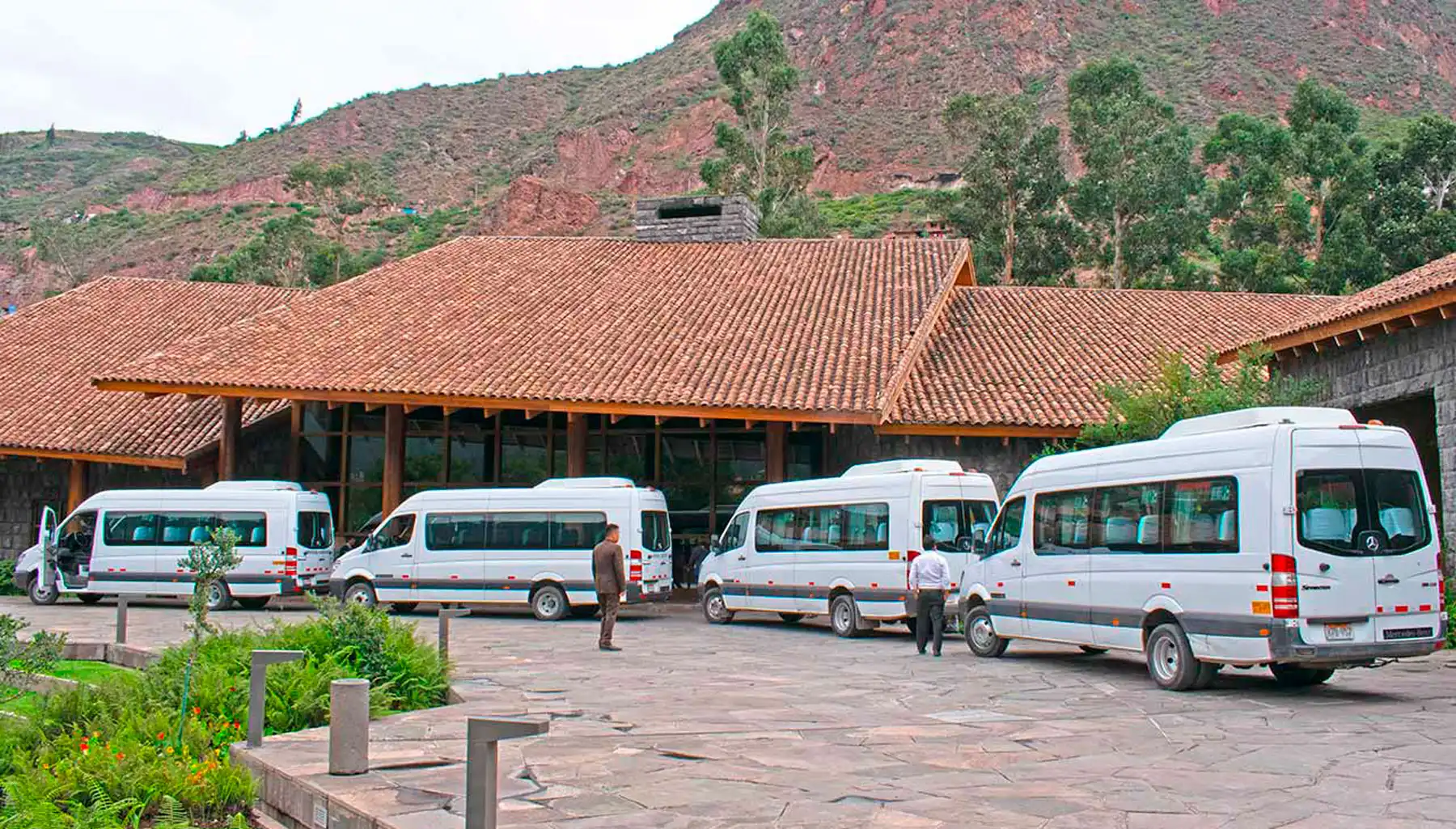
Most Ausangate treks include transportation from the city of Cusco to the starting point of the hike, which greatly simplifies the logistics of the trip.
In the case of the Salkantay Trek, if you’re staying in the historic center or near the Plaza de Armas, the service includes pickup from your hotel and direct transfer to the start of the itinerary you choose. This allows you to begin the experience without worrying about transportation, routes, or coordination at your destination.
Guided Trekking vs. Independent Trekking
Choosing between a guided tour and trekking on your own depends on your experience, your level of fitness, and the type of trip you’re looking for in the Ausangate.
Guided Tour
Trekking the Ausangate with a specialized agency not only simplifies logistics but also significantly improves safety and the quality of the experience on a demanding and remote route.
- Greater safety on poorly marked, high-altitude routes
- Includes transportation, camping, and full organization
- You don’t need to carry all the weight: equipment is transported by mules or horses
- Professional guides who know the route, the weather, and the local communities
- Staff trained in first aid (WAFA), prepared to respond to emergencies
- Avoids inconveniences along the way, such as disorganized fees or confusion regarding access to communities
- After each day’s hike, enjoy hot meals and hot drinks
- Allows you to focus on enjoying the experience without worrying about daily logistics
This is the most recommended option due to the altitude, isolation, and complexity of the route.
Independent Trekking
Trekking the Ausangate on your own is a valid option, but it requires experience, preparation, and the ability to adapt to demanding conditions.
- Greater freedom in terms of schedule and pace
- Ability to design your own route
- Requires high-altitude trekking experience
- Requires detailed planning, navigation (GPS), and a full set of gear
- Involves carrying all your gear or hiring local support (mules) along the way
- Greater exposure to logistical, weather, or access-related issues
This option is recommended only for travelers with prior mountaineering experience and the ability to be completely self-sufficient in remote environments.
Is the Ausangate route worth doing?
Yes, and for many travelers, it is one of the best trekking experiences in Peru.
Unlike more crowded routes, Ausangate offers remote landscapes, genuine contact with Andean communities, and a sense of authentic adventure. Here, you don’t just walk: you disconnect from mass tourism and connect with nature in its purest form.
In fact, among high-altitude trekkers, it is often compared to iconic routes like the circuits to Annapurna or Everest base camps not for the infrastructure, but for the sense of isolation, challenge, and connection with the environment.
If you’re looking for a demanding yet deeply rewarding experience, Ausangate is definitely worth it.
Is the Ausangate trek difficult?
Yes, it is considered one of the most challenging trekking routes in Peru, mainly due to the altitude and weather conditions.
It is not a hike for beginners. However, with good physical and mental preparation, it is entirely achievable for travelers with experience in high-altitude trekking.
How to prepare for the Ausangate trek?
Acclimatization
Acclimatization is essential to avoid altitude sickness (soroche). It is recommended to arrive in Cusco (11,150 ft / 3,400 masl ) at least 2 or 3 days before starting the trek and engage in light activities such as visiting Lake Humantay or the Rainbow Mountain.
In high-altitude trekking, acclimatization is key. In fact, many experienced travelers prefer to acclimatize for 5 to 7 days before tackling demanding routes like Ausangate.
For this reason, more comprehensive itineraries allow for gradual acclimatization before the trek, such as the 7-day Spirit of Machu Picchu.
Who is the Ausangate trek for?
- Travelers with experience in high-altitude trekking
- Nature lovers seeking unspoiled landscapes
- People who prioritize adventure and authenticity over comfort
- Mountaineers looking for challenges off the beaten path
It’s not for everyone, but for those who choose it, it often becomes one of the most memorable experiences in the Andes.
What to bring to Ausangate?
The Ausangate trek is a demanding high-altitude experience, so bringing the right gear is key to your safety and comfort. Conditions can change quickly, so it’s important to be prepared for cold, wind, rain, and intense sunlight.
Below is the recommended essential gear:
Basic Gear
- Sturdy footwear: trekking boots with good traction, ideal for rocky and uneven terrain, and a pair of sandals to let your feet breathe.
- Layered clothing: includes thermal layers, a waterproof layer, and a windbreaker to adapt to temperature changes.
- Sun protection: sunscreen, sunglasses, and a hat or cap.
- Comfortable backpack: with good support and fit to carry your belongings safely.
- Trekking poles: help maintain balance and reduce impact on the knees.
- Lip balm: with SPF to prevent your lips from drying out or cracking
- Personal hygiene items: Bring the basics for your daily routine, such as biodegradable soap, a toothbrush, and toothpaste.
For high-altitude weather
- Sleeping bag: suitable for sub-zero temperatures (at least -10 °C / 14 °F).
- Headlamp: with spare batteries.
- Reusable water bottle: stay hydrated throughout the hike (Nalgene or similar).
- Plastic poncho or waterproof jacket: to protect against light rain.
- Power bank: to charge your devices.
Safety and documents
- Original ID for purchasing certain tickets
- First aid kit: includes personal medications, altitude sickness pills, or coca leaves
- Cash (soles): in small bills, as there are no ATMs or card payments along the route
Recommended extras
- Binoculars: ideal for wildlife viewing
- Bird guide: useful if you’re interested in spotting high-Andean species
- Swimsuit: in case you visit one of the hot springs along the way
- Camera: with extra batteries
- Trekking poles: highly recommended for support